

There is a particular kind of exhaustion that no holiday fixes. The one that accumulates slowly — screen by screen, notification by notification, conversation by conversation — until the act of simply being still feels like another task you are forced to do.
This is where this interior begins. Not with a style reference or a Pinterest board, but simply with a question we asked our client: where do you feel most yourself?
The client answered without hesitation: walking along the coast, through the pine forest that runs along the white dunes and the Baltic Sea, standing among those trees — sheltered, grounded and held — while a stormy wind moves through the treetops above and waves crash loudly onto the shore. Within that paradox — of the raging sea and the stillness of the trees — the client felt called to let go of exhaustion, free the mind and just witness the moment.
The starting point of the brief was not a colour palette, but a felt state whispered by the nature.
Translating a walk into a room
The challenge of this kind of brief is that a feeling cannot be specified on a drawing or sourced from a catalogue. It has to be built with patience and discipline, decision by decision, material by material, until the finished space holds the same state of mind as the walk itself.
So how do we create a feeling so personal, shaped by context and inner interpretation? How do we translate a forest that is never still, constantly moved by wind, light and weather? How do we turn a still interior into something that feels alive?
Our first sketches told the story in four words: forest, dunes, clouds and sea. To these we added one more reference — a glass bottle found on the beach, frosted and smoothed by water and time. No one knows where it sailed from, yet it holds its mystery quietly within.
Every material decision flowed from there.
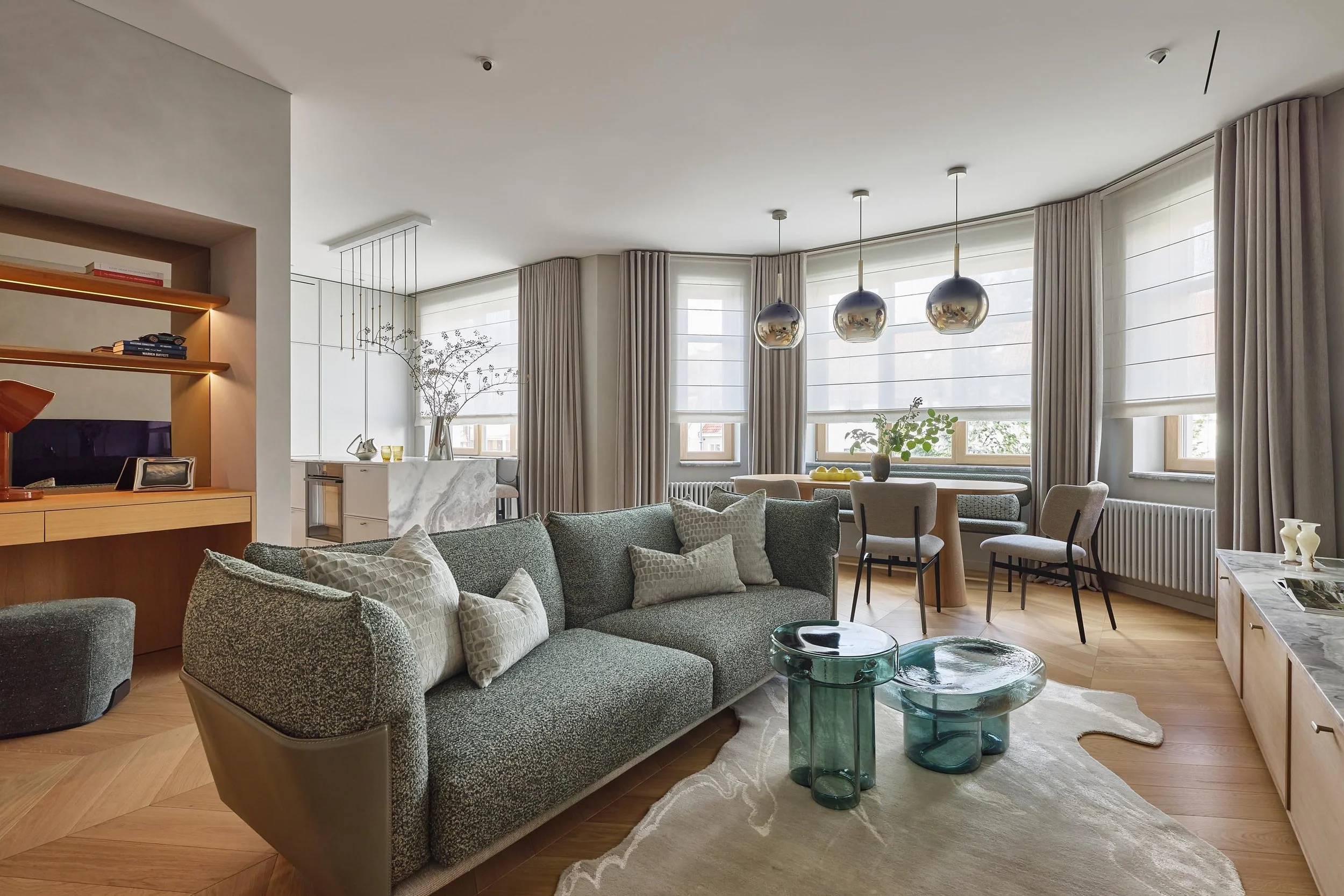
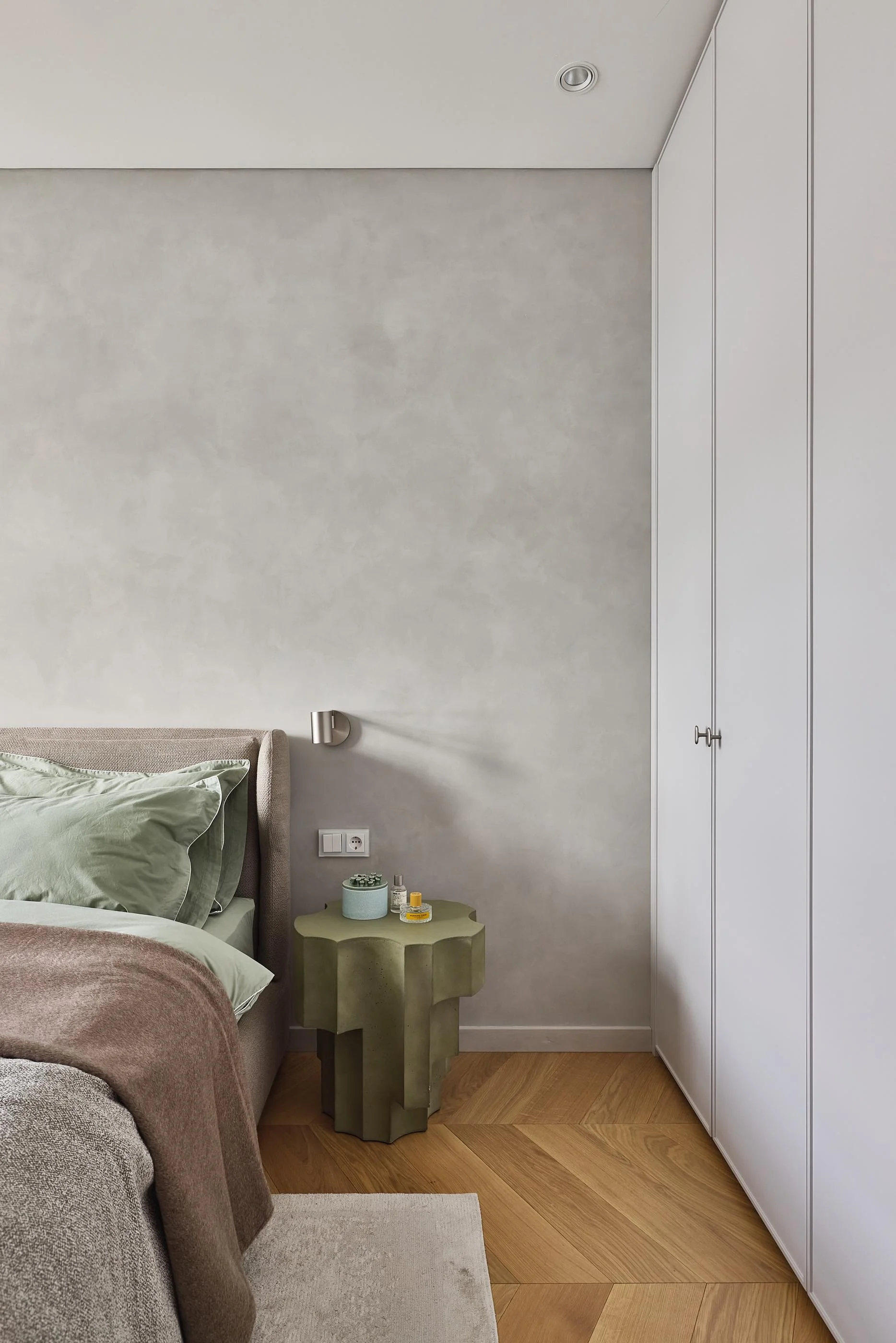
The warmth of the forest was captured in the oak chevron floors. Textured stucco on the walls recalls the sky just before rain, pale and clouded, a surface that shifts with the light from morning to evening. Wool and silk rugs carry patterns that drift like wind across sand, yet stay soft underfoot. Bouclé, used throughout the rooms, has the gentle, uneven texture of evergreen moss and combined with linen – brings a look of relaxed atmosphere.
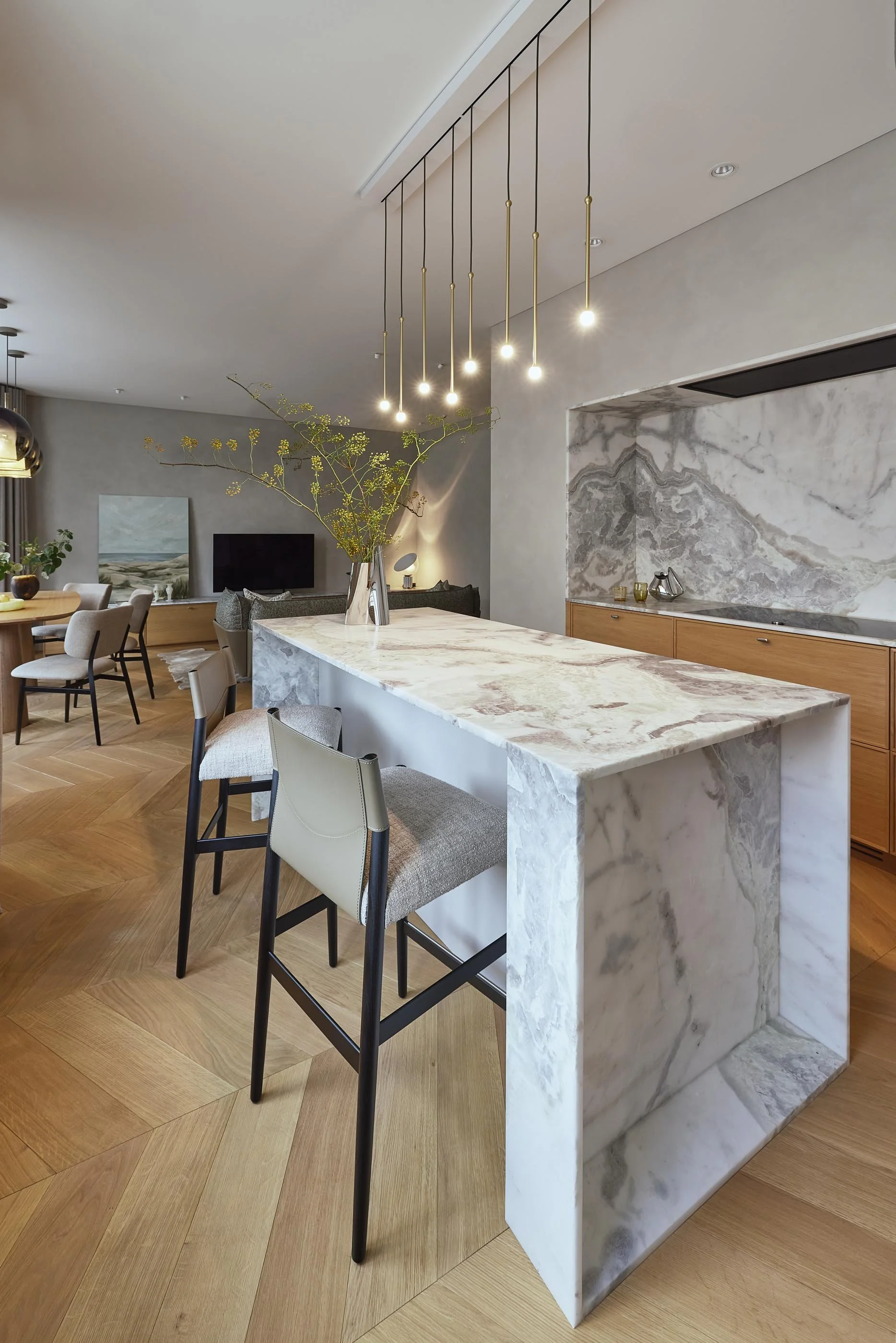
Finding the right stone took time, as did every piece of this interior. Oyster White marble became a quiet thread running through the home, from the kitchen to the living room, bedroom and bathroom, its wave-like veins of grey and subtle green moving like mist over the sea. The long search was never a complication. It was part of our commitment to the process. For us, interior design is simply discipline.
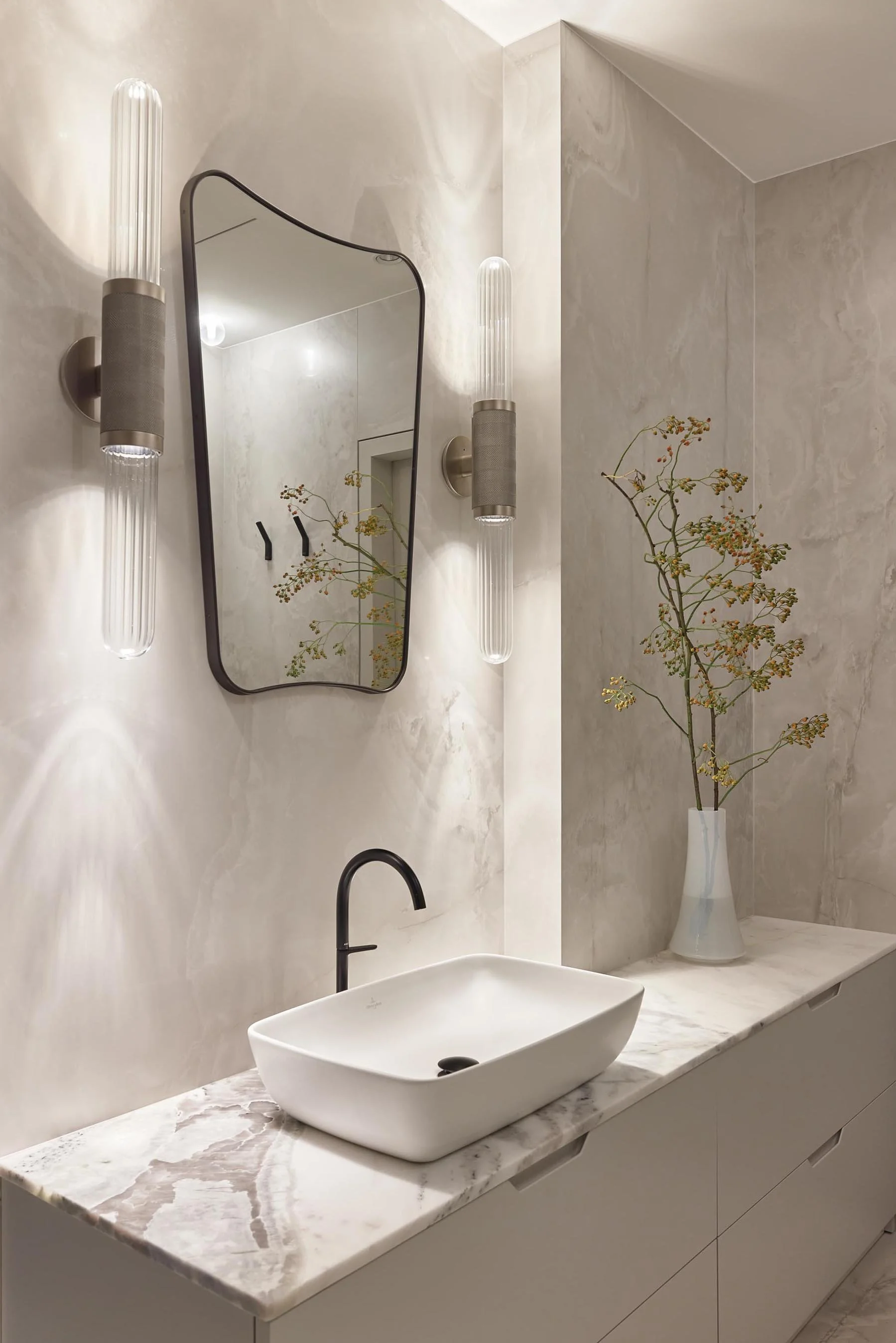
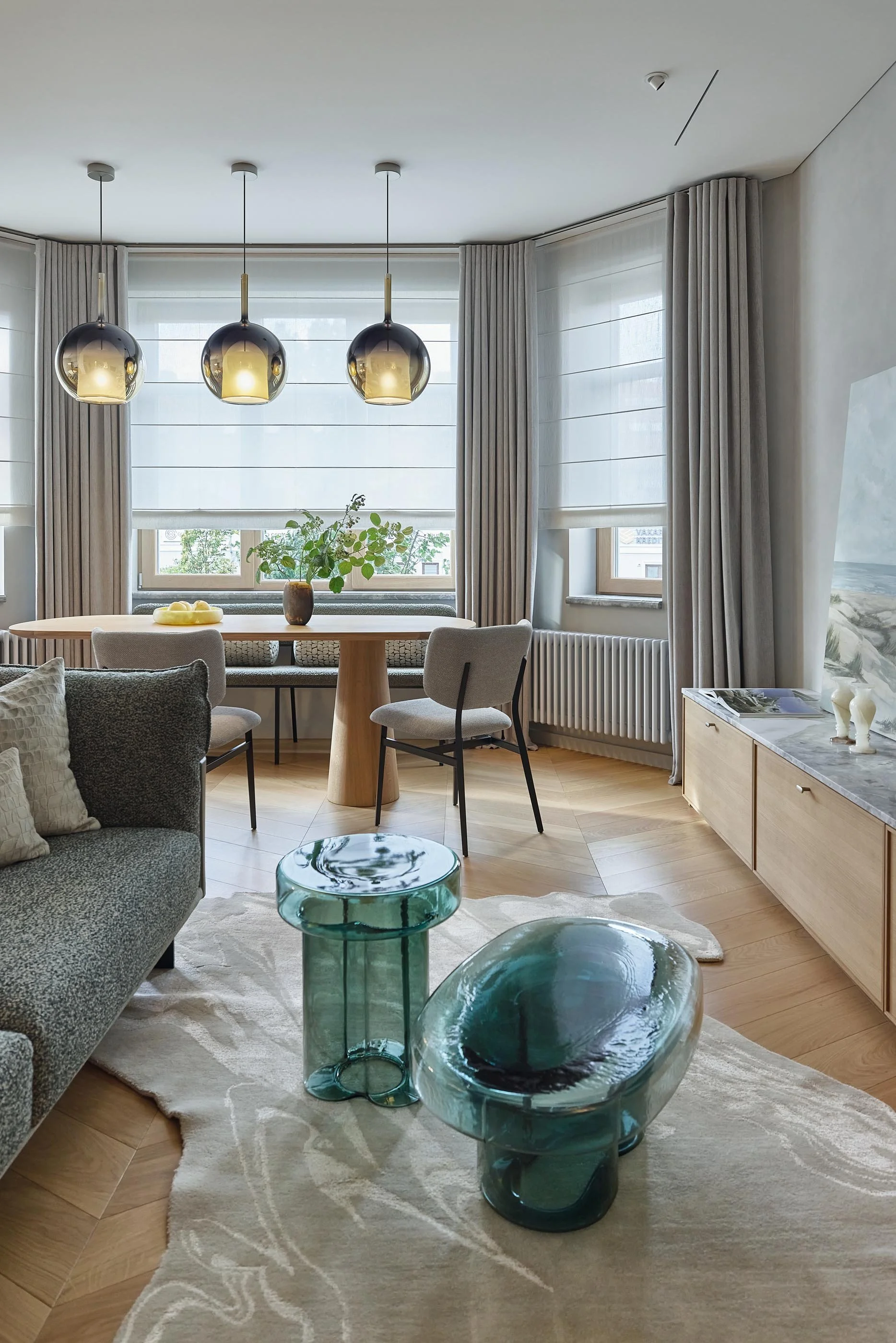
The lighting deserved a dimension of its own. While most finishes were deliberately kept matt we chose a glass fixture for each space with particular purpose. They catch every shift of the Baltic weather, painting playful shadows across the rooms. None of them is dramatic; each is subtle and handmade, a personal touch, like jewellery.
What the photographs cannot show
Looking at the photographs, you see a calm, harmonious interior with an open plan, where furniture quietly draws invisible boundaries between the spaces. What the photographs cannot show is how it feels to be in it, and the sequence of decisions that made it real.
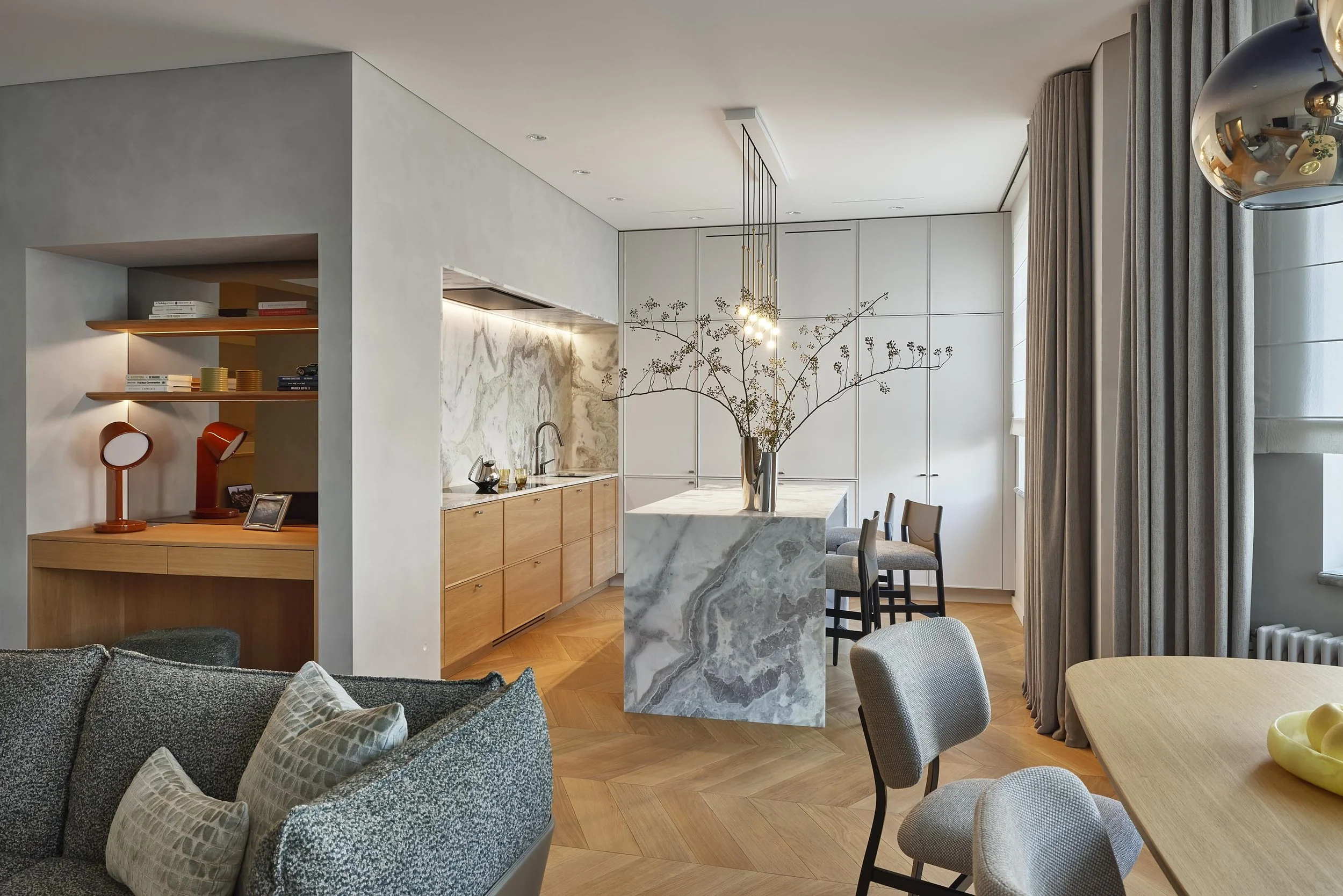
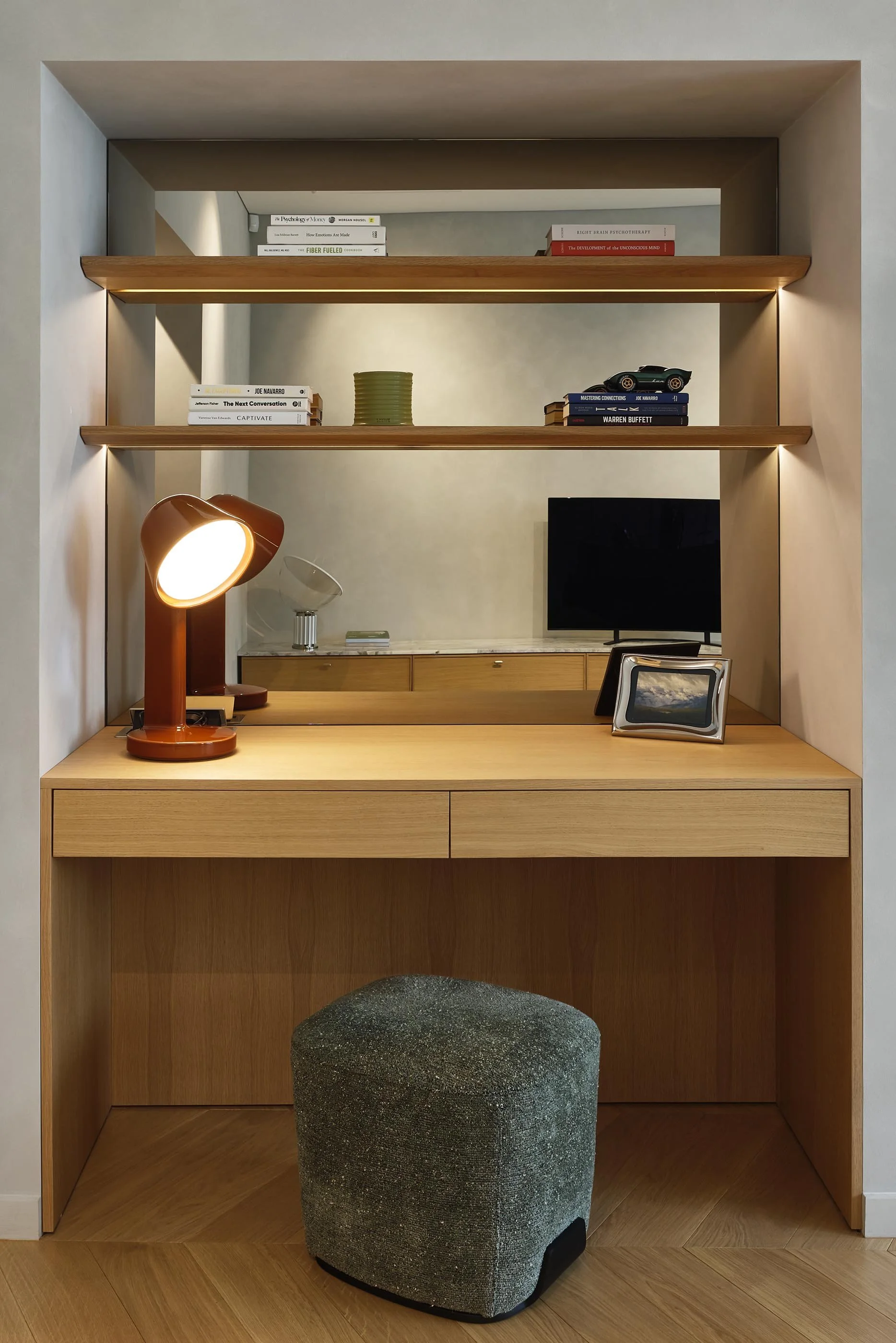
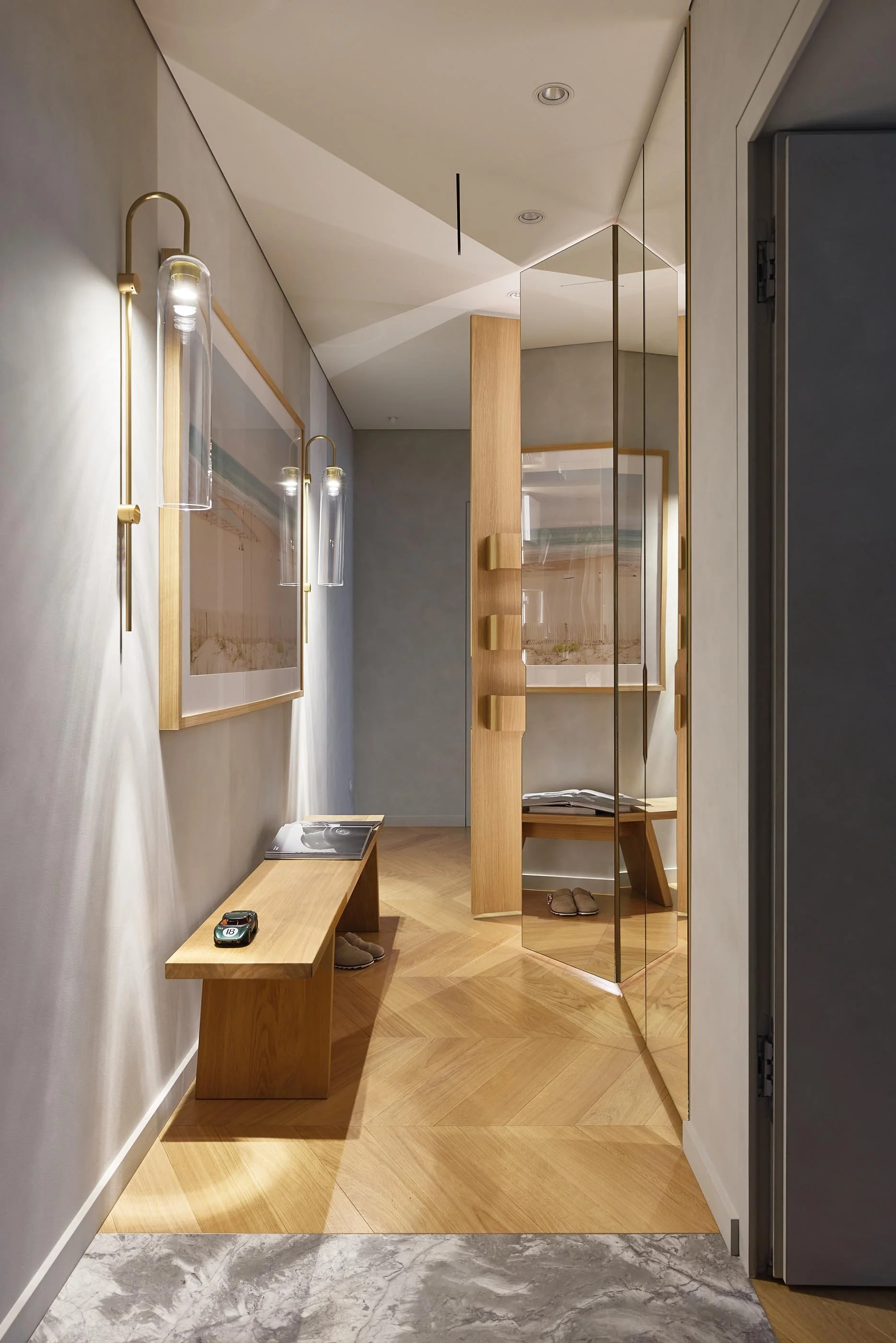
The feeling of safety in this interior did not arrive intuitively. It was built through a commitment to the process that began long before a single piece of furniture was even considered. Every design element was chosen as an emotional anchor for the entire space, which called for pieces that are organic, imperfect and handmade, and for the right manufacturers rather than the most accessible ones.
Behind these photographs lie hours of thorough analysis and solutions crafted for each space. A result like this is achieved with expert support.
On the philosophy behind the result
At Studio Pknows, we are often asked how we arrive at the feeling in our interiors.
The honest answer is that the feeling is never a starting point in our work. It is not something we intuit from a mood board or extract from an initial consultation. It is the result — the outcome of uncompromising choices made consistently over time: the right material over the convenient one, the right manufacturer over the available one. Holding that vision steady through every stage of the project, when it would be easier to compromise, is the true discipline of interior design.
We believe that understanding your unique needs takes courage: the courage to make a conscious commitment to the creative process and to ask uncomfortable questions, such as “What does this mean to me?” The end result, an uncompromised vision, lies in uncovering the distinct potential of the space, shaped by who you are.
The challenge lay in capturing the feeling experienced while walking along the seashore — and translating it into an interior space. It meant not only creating an environment capable of encompassing the complexity of a living forest, but also finding materials that could transpose that inner sensation into the atmosphere of a home. This required patience, meticulous attention to detail, and a refusal to settle for anything that was merely "close enough.
Where do you feel most yourself? What if your home is beautiful, yet does not hold the substance of who you truly are? If you would like to find the answer in the rooms of your own home, we would be glad to begin there.
Written by a human, not by artificial intelligence.